Grizzly Bears in Hyperphagia

Mason O'Donnell
| 20-08-2026
 · Animal Team
Good Day, Readers! As summer begins to fade across the mountains and forests of western North America, grizzly bears enter one of the most demanding periods of their yearly cycle: hyperphagia.
During this seasonal phase, feeding becomes the bear's main priority. It spends much of the day searching for calorie-rich foods, because the energy gathered before winter will help sustain the animal through months spent inside a den.
What Happens During Hyperphagia?
During hyperphagia, a grizzly can spend many hours each day looking for food. Its movements may take it through forests, meadows, riverbanks and mountain slopes as it follows whatever resources are available. The timing is not identical everywhere. In colder northern landscapes, winter can arrive earlier, while bears in milder areas may continue feeding later into the year. Weather also matters. A sudden cold spell, early snowfall or shortage of natural food can influence when a bear finally settles into its den.
The bear's appetite during this period is extraordinary. It can gain several pounds in a single day when food is plentiful. Rather than eating one enormous meal and resting for days, it often feeds repeatedly, taking advantage of opportunities whenever they appear. A berry patch may receive several visits. A productive hillside can keep a bear occupied for hours. A carcass can become an important source of concentrated nourishment. The bear's entire routine begins to revolve around finding enough calories before winter closes in.
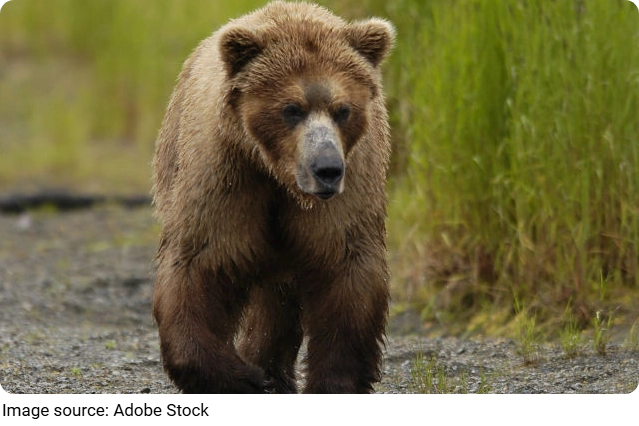
A Menu That Changes With the Landscape
Grizzlies are highly adaptable eaters, and their autumn menu can look very different from one region to another. Berries can become particularly valuable when they ripen in large quantities. A grizzly may spend hours moving through vegetation, pulling fruit from shrubs and consuming large amounts in a relatively short time. Roots, grasses, sedges and other plant material can also contribute to the seasonal diet.
Why the Bear Needs Such an Intense Feeding Season
A grizzly cannot spend winter feeding in the same way it does during summer and autumn. Once it enters its den, its activity decreases dramatically, and its body enters a state of reduced metabolic activity. The energy accumulated before denning becomes crucial during this period. Instead of regularly searching for food, the bear remains sheltered for months, using its stored energy to support breathing, circulation, temperature regulation and other essential functions.
The Body Changes Before Winter
The physical transformation can be striking. As hyperphagia progresses, a grizzly becomes heavier and develops substantial energy reserves beneath its thick coat. Its body is preparing for an extended period without regular meals. At the same time, the bear's thick winter coat provides insulation against low temperatures. The combination of stored energy, reduced metabolism and dense fur allows it to remain sheltered through conditions that would be difficult for an actively feeding animal.
Food Shortages Can Make Autumn More Difficult
Hyperphagia works best when the landscape provides plenty of nourishment. But autumn food is not guaranteed. Berry crops can be poor. Seed production can vary from one year to another. Fish may become unavailable, and animal carcasses are not always easy to find. When preferred foods are scarce, a grizzly has to work harder and travel farther. It may spend more time searching across large areas, switching between several types of food rather than concentrating on one particularly productive source.
Why Human Food Can Become Dangerous
The powerful feeding drive of hyperphagia can also bring grizzlies into conflict with people. Garbage, pet food, improperly stored provisions and other human-associated food can be extremely attractive to a hungry bear. Once a bear learns that people can provide an easy source of calories, it may return repeatedly.
That creates a dangerous situation for both the bear and nearby communities. A grizzly that repeatedly approaches human areas may eventually be considered a serious safety concern. Keeping food and garbage secure in bear country is therefore especially important during autumn, when the animals are strongly motivated to find nourishment.
The Countdown to the Den
Eventually, the frantic autumn feeding period comes to an end. Snow becomes deeper, temperatures drop and the bear retreats toward a sheltered den. Inside, the grizzly enters a dramatically quieter phase of its yearly cycle. The animal no longer spends its days walking through forests in search of berries, seeds or prey. Instead, it remains protected from winter conditions while relying on the reserves gathered during hyperphagia.
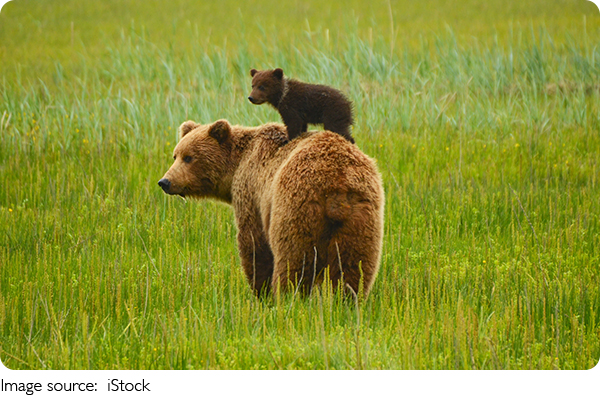
Hyperphagia is one of the clearest examples of how closely wildlife behavior can follow the changing seasons. For a grizzly, autumn is not simply the time of colorful forests and falling temperatures. It is a race against winter. The bear must find enough nourishment, use its environment wisely and build the reserves needed for months inside a den. Once winter arrives, there is no easy opportunity to make up for what was missed.