Automatic Gearbox Guide

Santosh Jha
| 31-08-2026
 · Vehicle Team
Choosing a car involves more than considering its engine, design, or features.
The transmission also plays an important role in how a car accelerates, changes speed, and feels during everyday driving.
AT, CVT, and dual-clutch transmissions use different technologies to deliver automatic driving. Understanding their characteristics can help you choose a car that better matches your priorities, whether you value smoothness, efficiency, or responsive performance.
What a traditional AT feels like
A traditional automatic transmission, commonly called an AT, typically uses a torque converter together with a set of fixed gear ratios. It automatically changes between these ratios according to driving conditions, allowing the engine and transmission to work together smoothly.
During everyday driving, an AT can provide predictable acceleration and comfortable operation. Starting from a stop, moving through traffic, and cruising at higher speeds can all feel natural when the transmission is properly calibrated. Modern automatic transmissions also use multiple gear ratios to help balance performance, engine speed, and fuel efficiency.

How a CVT behaves
A continuously variable transmission, or CVT, works differently from a traditional automatic. Instead of shifting through a fixed number of conventional gears, it continuously varies its ratio to help keep the engine within an appropriate operating range.
This can produce smooth acceleration because there are no conventional gear changes between fixed ratios. A CVT can also support efficient engine operation, particularly during steady everyday driving.
The driving sensation can differ from that of a traditional AT. During stronger acceleration, engine speed may rise and remain relatively steady while the car continues gaining speed. Some drivers may appreciate this smooth and efficient behavior, while others may prefer the more noticeable gear changes of a conventional automatic.
Where dual-clutch transmissions stand out
A dual-clutch transmission, or DCT, uses two clutches to control separate groups of gears. This allows the transmission to prepare an upcoming gear while the car is still using the current one, supporting quick gear changes.
In everyday driving, this can create a direct and responsive feel. Acceleration may feel particularly immediate when changing speed or joining faster-moving traffic.
The character of a DCT depends heavily on its design and calibration. Some systems provide smooth operation in normal traffic, while others may produce more noticeable responses during very slow movement or frequent stopping and starting. The overall experience therefore depends on the complete vehicle rather than the transmission type alone.
Comfort, efficiency, and daily use
Each transmission offers a different approach to everyday driving.
A conventional AT can provide a balanced combination of smooth operation, predictable gear changes, and flexible performance. It can suit drivers who prefer a familiar and refined automatic driving experience.
A CVT focuses on continuously adjusting the transmission ratio instead of making conventional gear changes. This can provide seamless acceleration and help the engine operate efficiently.
A DCT emphasizes rapid gear changes and a direct response to acceleration. It can suit drivers who prefer a more immediate driving character while still wanting automatic operation.
Long-term transmission performance also depends on more than transmission type. Engineering quality, cooling, maintenance, calibration, driving conditions, and vehicle design all influence how a transmission performs over time.
Which transmission suits daily driving?
There is no single transmission that is ideal for every driver. The right choice depends on how the car will be used and the driving characteristics you prefer.
An AT can be a strong all-round option for drivers who value smooth and predictable operation. A CVT may appeal to those who prioritize seamless acceleration and efficient everyday driving. A DCT can be attractive to drivers who prefer quick gear changes and a more responsive feel.
The best way to compare them is through a proper test drive. Pay attention to how the car moves away from a stop, responds to acceleration, behaves in traffic, and maintains a comfortable rhythm while cruising.
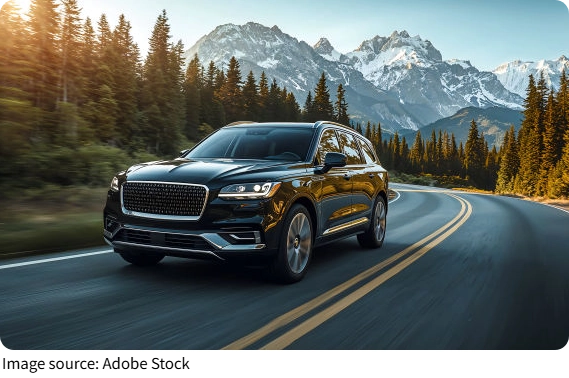
The transmission is a key part of a car's everyday driving character. AT, CVT, and DCT systems can all provide effective automatic operation, but they achieve it through different technologies and deliver distinct driving sensations.
Understanding these differences makes it easier to choose a car that matches your priorities. Whether smoothness, efficiency, or responsiveness matters most, the ideal transmission is the one that provides the driving experience you find comfortable and natural every day.